
Student’s Book Reviews Show Human Costs of Court Rulings

While some pre-law students focus on statutes and precedents, Ella Miller ’26 has spent her senior year exploring the emotional truths and human lives that exist in the gaps between court rulings.

As an English major at Kalamazoo College, Miller’s Senior Integrated Project (SIP) began as an ambitious challenge to bridge the plain reasoning of the U.S. Supreme Court with the realities of immigrant experiences. Her Race, Law and Politics class, along with her Advanced Nonfiction course, inspired her to pair four major Supreme Court cases on immigration with four books written by authors deeply connected to the decisions’ impacts. Through the combination of case briefs and literary analysis, Miller examined how legal reasoning resonates beyond the courtroom.

“It was stylistically interesting to insert a Supreme Court opinion while also providing facts, and the organization intrigued me,” she said. “I thought it would be interesting to write reviews about books that were influenced by these major Supreme Court decisions, some of which I was learning about in class.”

Connecting Law and Literature

Miller organized her SIP around four immigration-related groups and eras: Chinese immigrants during the Chinese Exclusion Era, Japanese Americans during World War II, Latin American immigrants affected by contemporary policies, and refugees impacted by the 2018 Trump v. Hawaii ruling.

She selected landmark cases associated with each topic, then sought books across genres that offered lived perspectives on the decisions’ consequences. Her final author list included:

  • John Okada, No-No Boy, paired with Korematsu v. United States.
  • Erika Lee and Judy Yung, Angel Island: Immigrant Gateway to America, tied to the era of Chinese exclusion.
  • Sandra Uwiringiyimana and Abigail Pesta, How Dare the Sun Rise: Memoirs of a War Child, connected to modern refugee issues.
  • Areli Morales, Areli Is a Dreamer, linked to DHS v. Regents of the University of California, related to the recent Deferred Action for Child Arrivals (DACA) case.

By examining fiction, nonfiction, a memoir, and even a children’s book, Miller highlighted the diverse ways personal stories illuminate historical and legal realities.

“What makes them all special is the different ways a story can be told,” she said. “A historical nonfiction book offers documented evidence, while a novel can convey emotional truths through fictional characters. And the children’s book, which was my favorite, brings hope and understanding.”

Bringing Clarity to Complex Cases

Drawing on skills from her constitutional law coursework, Miller began each book review with a one-page case brief, which is a concise summary designed to make a legal case accessible to any reader.

“Case briefs can be eight pages long, so I wanted to take the most prominent parts and briefly summarize them with background, the main issue, and the court’s ultimate decision,” she said. “I talk about the author, how we can see some of the big issues in society reflected in how the decision was reached, and how that decision was then felt by the people impacted by the decision.”
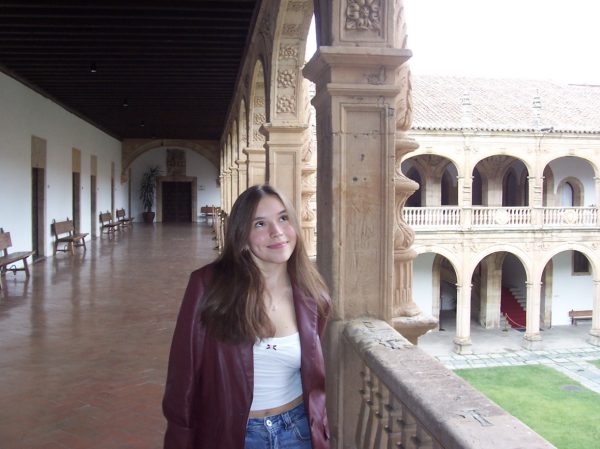
Ella MIller in Salamanca, Spain, before studying court rulings
Ella MIller ’26 stands in the historic inner courtyard of the Colegio Arzobispo Fonseca in Salamanca, Spain, during her study abroad experience.
Miller with a group in León, Spain, before studying court rulings
Miller with a group at the joined cathedrals of Salamanca in Castile and León, Spain.

With that foundation in place, she used each book to explore how the court’s rulings were experienced by real people. For Miller, the contrasts revealed what legal texts alone seldom show.

“I think each of these books is valuable, and you can take away a lot on your own,” she said. “But having a real understanding of how the court was reasoning through these decisions adds another layer to how people are affected. In Korematsu v. the United States, for example, the decision allowed for Japanese internment to be held constitutional for domestic safety. But when you read No-No Boy, you can see that Japanese Americans on the West Coast were not a threat in any way.”

Ichiro, the protagonist of No-No Boy, returns home from years in an internment camp and has to come to terms with his dual heritage and how to build a future in the country that imprisoned him.

A Project That Shaped a Future Career

Although the SIP more than satisfied academic requirements, it also reshaped Miller’s confidence and confirmed her path toward law school.

“K is great with giving you lots of creative control in your work, and I’ve never felt stifled,” she said. “But to be given a blank slate where I could choose the topic and my sources while exploring what’s interesting to me gave me a lot of confidence as a writer. It made me feel more prepared for the next steps in my life because I plan to go to law school, and writing is super important. I need to think argumentatively and critically, so I feel my SIP was valuable in giving me the confidence to know that I can produce something like this.”

Faculty mentors played a key role. Miller credits Associate Professor of English Shanna Salinas for ongoing guidance, Associate Professor of Political Science Justin Berry for deepening her interest in law, and Professor of English Amelia Katanski ’92, her advisor, for helping her explore connections between law and literature.

Outside the classroom, Miller holds leadership roles in K’s student organizations related to law. She’s the president of the Phi Alpha Delta law fraternity chapter and the secretary for the Aspiring Law Students Organization. She said the experiences strengthened her sense of purpose.

Next Steps: Spain, Service and Law School

After graduating this spring, Miller hopes to spend a year teaching English in Spain through a Fulbright grant. If she’s not selected, she will teach through the North American Language and Culture Assistants Program (NALCAP), which is also based in Spain. She studied abroad in Madrid and hopes to return to deepen her language skills and global perspective.

“International relationships are really relevant to law,” she said. “The experience would help shape the kind of legal career I want.”

Law school applications will follow next year. But if there’s one lesson Miller hopes readers take from her SIP, it’s that Supreme Court decisions are not abstract.

“The law impacts people in enormous ways,” she said. “If you’re not directly affected, it can be hard to understand that. Literature gives us a way to see what those impacts look like in real life.”
Student Group Seeks Alumni Who Work in Law

The Aspiring Law Student Organization (ALSO) at Kalamazoo College is seeking alumni to return to campus to talk with students about their journeys in the legal profession. Group leaders say those conversations are among the most valuable ways to show students what’s possible with a law degree. 

“Hearing from someone who sat in the same classrooms and then went on to pass the bar is incredibly valuable,” said Libby McFarlen ’26, ALSO’s president. “Alums can talk about how K prepared them in a way that other schools can’t.” 

McFarlen is leading the effort to reinvigorate ALSO after the group had been relatively quiet in recent years. She stepped into the presidency at the encouragement of last year’s leader, who believed her passion for the field and professional connections could help strengthen the organization. She now works alongside Vice President Laura Goia ’27, an exchange student from Romania; Secretary Ella Miller ’26; and Treasurer Isabelle Mason ’27 to establish ALSO as a go-to resource for students considering careers in law. 

A major focus this year is to help students see law as a less-intimidating, more accessible field. McFarlen wants ALSO to balance serious programming—such as alumni panels and attorney visits—with lighter events designed to spark interest. For example, students can enjoy an upcoming movie night featuring the comedy film Legally Blonde, and also attend one of the standout events of this fall: an October 22 campus visit from the assistant director of admissions at Harvard Law School

Through these events, McFarlen hopes to showcase the variety of paths available in law. “A lot of people think being a lawyer is only about arguing in a courtroom, but there are so many areas—sports law, election law, patent law,” she said. “Students deserve to see that breadth.” 

McFarlen’s own experiences highlight the importance of real-world connections. Over the summer, she completed a legal internship with the City of Grand Rapids, working alongside prosecuting and litigation attorneys. As the only undergraduate among law school interns, she conducted legal research, prepared cases, and assisted attorneys in court. The experience confirmed her interest in criminal prosecution and underscored how rare it can be for undergraduates to access hands-on legal opportunities. 

“I was the youngest in the office, but it didn’t matter,” she said. “I learned so much, and I want other students to have those opportunities, too.” 

Looking ahead, ALSO is considering initiatives such as a mock trial team, law-themed trivia nights and panel discussions with government attorneys. McFarlen emphasized that inclusivity will remain central to the group’s mission along with it providing a support system and a launching pad for students whether they’re preparing for law school or simply curious about the profession. 

“Law can seem like a predominantly white, elite field,” she said. “We want students of color and students from all identities to see attorneys who look like them and know this path is open to them. Anyone is welcome to join whether they’re studying for the LSAT or just wondering what lawyers actually do.” 

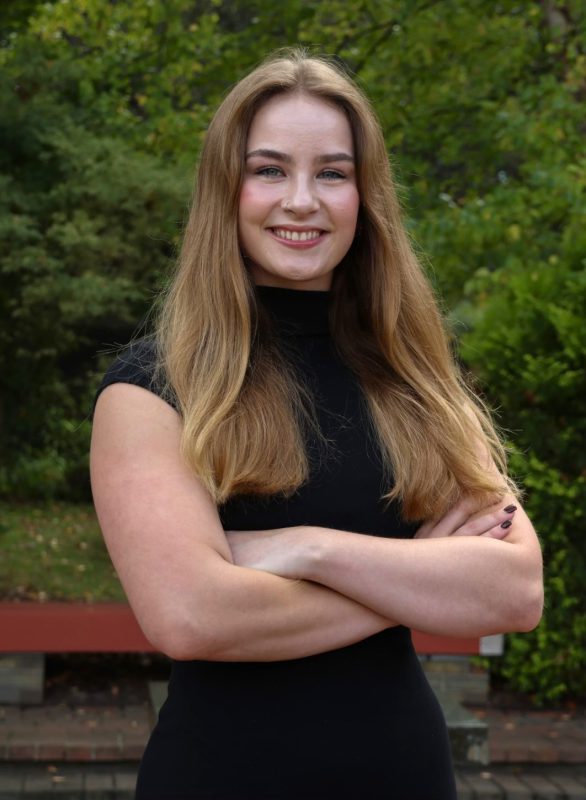
Portrait of Aspiring Law Student Organization President Libby McFarlen
Aspiring Law Student Organization President Libby McFarlen ’26 wants Kalamazoo College students to see a breadth of opportunities available to them when they pursue the legal field.

Calling K Alumni in Law 

The Aspiring Law Student Organization (ALSO) wants to hear from you. If you’re a Kalamazoo College graduate working in the legal field, students would love to learn from your journey. 

Ways to get involved:

  • Speak on a career panel or Q-and-A session. 
  • Host a small-group discussion with students. 
  • Offer virtual mentoring or job-shadowing opportunities. 

Interested? Contact ALSO President Libby McFarlen ’26 at libby.mcfarlen22@kzoo.edu

Distinguished Judge Testifies to Power of K-Plan


Testifying to the enduring value of the K-Plan, renowned former U.S. District Judge Gerald Rosen ’73 told Kalamazoo College students in a campus visit that “it made me who I am.”

Judge Gerald Rosen talks with students at Kalamazoo College
Students were invited to meet retired Chief U.S. District Judge Gerald Rosen ’73 on Monday, Feb. 19, and hear him talk about how his K experience helped him forge an exemplary career in public service and law. That career included engineering the “Grand Bargain,” which brought Detroit out of bankruptcy and paved the way for Motown’s rebirth.

“I’m a real product of the K-Plan,” said the recently retired judge, who presided over the Detroit-based U.S. Eastern District of Michigan and handled cases that included the city’s 2013 bankruptcy, the largest of its kind in U.S. history.

He came to the College to play tennis, he said, and had a vague idea about becoming a doctor. However, a familiar nemesis of many a would-be medical student — “two words,” Rosen said. “Organic chemistry” — dissuaded him from pursuing that field. He said his academic adviser pushed him toward political science, often a path to law school, and the K-Plan did the rest.

In a question-and-answer session with a student audience in the Olmsted Room at Mandelle Hall, Rosen recalled as particularly influential a history course that introduced him to the “roller coaster” career of Winston Churchill, the late wartime British prime minister who remains one of his heroes. He also cited philosophy courses that taught him the finer points of reasoning and writing; the challenge of participating in experiential learning opportunities that included working in the office of then-Michigan Gov. William Milliken; and study abroad in Sweden.

“I spent as many (terms) off campus as I did on campus,” he said, adding that experiences such as being a student teacher in an inner-city Philadelphia school challenged him to develop his self-reliance and fostered in him a sense of independence.

“You become confident in your ability to reason through things on your own,” he said. “I think if I had gone to a school that had a traditional program and a cookie-cutter curriculum I probably would have come out of it a different person than I am today.”

During his day at K, Rosen also spoke to a philosophy of law class led by Max Cherem ’04, the Marlene Crandell Francis assistant professor of philosophy; met with faculty; visited with the men’s tennis team as he praised K’s program as fostering “true student athletes;” and dined with President Jorge G. Gonzalez and Suzie (Martin) Gonzalez ’83.

Now beginning a new career as a high-level mediator with Judicial Arbitration and Mediation Services, Rosen served as a judge on the U.S. District Court in Detroit from 1990 to 2017 and was chief judge from 2009 to 2015. He long provided internships in his chambers to K students and graduates and received the Kalamazoo College Alumni Association’s Distinguished Achievement Award in 2014.


K’s Latest K-Trek Passes all Tests

K to the Windy City students on K-Trek
Roundtable meeting in Chicago during K to the Windy City, the newest K-Trek.

Kalamazoo College’s latest K-Trek, K to the Windy City, tested two expansions — in numbers and event type. The results are in: success above expectations!

“We wanted a K-Trek that would accommodate more students and provide more types of student-alumni and student-thought leader interaction,” said Valerie Miller, assistant director for external relations in K’s Center for Career and Professional Development. K to the Windy City is the largest K-Trek to date. Twenty-five students and 57 alumni participated in the three-day event, which featured round-table meetings (standard for K-Treks) and also offered panels, a networking event, a customized itinerary for nearly every student, and some fun and relaxation at a Second City performance.

Coordinated by the CCPD, K-Treks are multi-day immersive discussions with leaders in various industries. Previous treks (inspired by the thinking of alumnus Brad O’Neill ’93) have visited San Francisco (where the focus was on entrepreneurship) and New York City (finance and business). The Windy City trek focused on the law and nonprofit administration, with social justice as the bridge between those areas of interest.

“Our 25 students divided themselves roughly into three tracks,” says Miller. “About a third was certain they wanted to pursue a career in law. Another third were equally sure about nonprofit administration. The final group was on the fence. All were interested in social justice.”

Valerie Miller Prepares for K-Trek
Valerie Miller during the extensive K-trek prep phase.

K to the Windy City “started” the day after winter term finals, but prep work commenced long before that. Wade Thomson ’98, an attorney at Jenner & Block who also does pro bono work with persons seeking political asylum in the United States, provided the unique framework for this K-Trek that focused on the intersection between Chicago and justice.

For their part, student participants researched the alumni whom they would meet (and the organizations they worked for) and then prepared a list of questions for the interaction.

For her part, Miller relied on the cover letters and résumés of each student to customize individual itineraries that would provide the most educational impact.

The meetings provided some excellent outcomes and revelations for the students, according to Miller. “Some very practical advice,” she explained, “such as the need for solid business skills in nonprofit administration; timing for law school and how to optimize a gap year, should one choose that option; and the surprising number of law-related work opportunities that do not require a J.D.

“For those students certain about their choice (law or nonprofit administration),” she continued, “the experience may have confirmed or focused their vision. Those less certain found value in the additional information they could use to eventually decide.”

Students on a bus heading to the latest K-Trek, K to the Windy City
K to the Windy City departs Kalamazoo College, headed for the newest K-Trek experience.

Student participants represented a cross section of classes, majors and geography. Twelve seniors, six juniors and seven sophomores composed this first Windy City trek. Fourteen academic majors were represented; 11 students call Michigan home; 11 come from a variety of states; three were international students.

“I learned more in two days about what a legal career entails than I had learned in my entire life up to that point,” said Benjamin Toledo, a senior anthropology/sociology and business double major.  “Given the chance to speak with successful lawyers from K provided us with the opportunity to clarify any uncertainty that we had in regard to a career in law, all while receiving advice from individuals who were once in our shoes.  It was a truly phenomenal opportunity to meet and connect with such talented people.”

“I was surprised by how many alumni didn’t always know exactly what they wanted to do or have a clear vision of where they’d end up,” said sophomore Lauren Arquette (political science). She was grateful for the insight. “It takes away a lot of the pressure we put on ourselves of feeling like we always have to have a plan, because often times, things don’t exactly go according to plan. I realized that life doesn’t have to be stressful and meticulously planned out for you to be successful.”

After the event, students were provided a survey to prompt reflections on the value of the experience. The participants also are writing biographies of the alumni with whom they met to post on the CCPD website for future Windy City trekkers.

K-Trek on public transportation
K students riding public transportation in Chicago.

“That’s a future for which we all hope,” says Miller. “This K-Trek was so successful that we’ll continue to work hand in hand with our colleagues in the Office of Development to encourage participation from alumni and to raise the funds for this and other treks.”

2017 Student Participants included: Abby Lu ’17, Ailih Weeldreyer ’19, Andrea Beitel ’17, Anja Xheka ’17, Anne Waugh ’19, Ben Toledo ’17, Blanca Moreno ’17, Carmen Nogueron ’18, Cat Cook ’17, Cody Howrigon ’18, Emily Levy ’17, Gunyeop Lee ’17, Hannah Lehker ’17, Heather Brown ’18, Honora Stagner ’17, Jasmine Khin ’18, Lauren Arquette ’19, Lauren Perlaki ’17, Madison Triplett ’19, Matthew Ryder ’18, Monet Foster ’18, Regina Shaw ’19, Ren Ballew ’17, Sirui Chen ’19 and Sydney Brown ’18.

The following alumni participated in a panel event, met with a group of students and/or hosted students at their place of work. Many of these alumni also provided additional support through funding, space, food and/or ideas for the planning of K to the Windy City, and many attended networking events — Kelly Bauer ’10, Assistant Corporation Counsel, City of Chicago Department of Law; Marietta Bowman ’02, Senior Survey Director, NORC at the University of Chicago; Jane Burchfield ’85, Manager of Talent Acquisition, NORC at the University of Chicago; Michael Cansfield ’87, Director of Development, Lookingglass Theatre; Megan Carney ’92, Director, Gender & Sexuality Center, University of Illinois at Chicago; Jeremy Cole ’96, Partner, Jones Day; Andrea Dakin ’98, Director of Program Development, AIDS Foundation; Kant Desai ’99, Principal, Cities for Financial Empowerment Fund; Mike Doornweerd ’92, Partner, Jenner & Block; Kim Drew ’00, Senior Project Manager, Economic Security Policy, Heartland Alliance; Caitlin Finan ’11, Research Analyst, NORC at the University of Chicago; Mark Furlong ’83, Chief Operating Officer, Thresholds; Marie Halverson ’93, Associate Director, Education and Child Development Studies, NORC at the University of Chicago; Cole Hardy ’06, Staff Counsel, FTD; John Hayes ’96, Assistant Unit Supervisor, Illinois Attorney General; Kathleen Hirsman ’76, Faculty, Loyola School of Law; Will Hobart ’06, Program Officer, Youth Guidance; Peter Knight ’95, Partner, Latham & Watkins; Carla Kupe-Arion ’02, Assistant Corporation Counsel, City of Chicago Law Department; Matt Lango ’97, Deputy Commissioner, Chicago Commission on Human Relations; Hope Lassen ’02,

K-Trek to the Windy City
Some fun at Second City

Restorative Justice Specialist, Alternatives, Inc.; Jodie Lawton ’99, Major Gifts Officer, McCormick Foundation; Stephanie Leite ’01, Lead Trainer and Curriculum Designer, Global Learning Modules; Matt Longjohn ’93, Evidence-Based Health Interventions and Community Integrated Health/National Health Officer, Y-USA; Carlton Marcyan ’76, Senior Partner, Schiller DuCanto & Fleck LLP; Elizabeth Okey ’07, Senior Associate, Corporate Responsibility, Burson-Marsteller; Jeff Owen ’76, Partner, DLA Piper; Anne Renaud ’10, Community Support Specialist, Thresholds; Sam Sedaei ’06, Associate Attorney, Foran Glennon; Wade Thomson ’98, Partner, Jenner & Block; Carla Varner ’97, Chief Legal Officer, Franklin Monroe; Mary Woolever ’70, Former Architectural Archivist and Reference Librarian, Ryerson and Burnham Libraries, Art Institute of Chicago; Mike Woolever ’71, Partner, Foley and Lardner.

The following alumni provided support for K to the Windy City through donations or through support/guidance around the development of trek events. Many also attended networking events — Alexandra Altman ’97, Doug Doetsch ’79, Jay Goodwin ’85, Andrea Johnson ’15, Alex Morgan ’11, Aaron Ries ‘06, Sonya Olds Som ’94, Juli Scalf ’09 and Elizabeth Schweitzer ’09.

And the alumni listed below participated in networking opportunities with students — Margy Brill ’11, Mathew Duggan ’09, Justin Evans ’09, Christine Grodecki ’06, Kelly Koss ’04, Haley Madel ’13, Kristen Nuyen ’12, Kathleen O’Donovan ’11, Sara Reschly ’95, Christopher Rollyson ’82, Christie Schuessler ’11, Jeannette Srivastava ’00, Erin Stockall ’11, Ajka Suljevic ’10 and Rachel Zarit ’02.