Film Depicting Indigenous Struggles Has U.S. Premier at K

Movie Poster for Minga Voices of Resistance Film Premier
The documentary film “Minga” Voices of Resistance” had its U.S. premier at K’s
Arcus Center for Social Justice Leadership.

A documentary film that had its U.S. premier at Kalamazoo College’s Arcus Center for Social Justice Leadership is illuminating the struggles of indigenous people from Patagonia to Mexico.

Tony Nelson, the assistant director of student engagement in the Center for International Programs, hosted the showing last month of Minga: Voices of Resistance, an international production by Pauline Dutron and Damien Charles. Together, the acclaimed co-directors help denounce the destruction of indigenous territories, spotlight cultural heritage and show how indigenous peoples are organizing themselves to inspire solutions.

The film, Nelson said, does an excellent job of raising awareness around two issues: the strategic and patterned violence perpetrated against indigenous peoples throughout the Americas and worldwide, and the resistance of those peoples, while calling for others worldwide to take up the fight against it.

“Sometimes intentionally, and sometimes accidentally, we don’t hear enough from people who have been marginalized historically and economically,” he said. “The more we can give amplification to the voices of folks who are being strategically ignored, censored or silenced, the better, in my opinion. I hope documentaries like this, as well as testimonies from students, can make those voices louder so more people are aware and more people get involved.”

For seven and a half years, Nelson ran a study abroad program in Chiapas, Mexico, where he met the filmmakers.

“They were in San Cristobal for a particular event called the National Indigenous Congress, so I got to meet them when they stayed at my friend’s house,” he said. “They had traveled from Belgium all the way to the southern tip of Chile and South America via sailboat by volunteering to work the sailboat, and then traveled only by bus all the way up to Mexico.”

Nelson said that while he was skeptical at first of the filmmakers’ intentions, he’s impressed with the end product.

“I was nervous about them accessing indigenous communities in a way that might feel exploitive, but I stayed in contact with them,” he said. “They spent a year transcribing all of their interviews, and then a year translating all the different languages into Spanish and English. I saw the film and I thought, ‘Oh, my gosh. They really did this. They did an amazing job.’ They did all these travels, and stayed focused on the voices of the communities in a way that centered voices that don’t get amplified often.”

The film is now available to anyone through a Creative Commons license, which allows it to be shown for free, although it was special to have the premier at K.

“The film is moving and well done,” Nelson said. “Regardless of my involvement or even knowing the filmmakers, I would have been speaking to people about it to raise awareness. They’re activists in Belgium, and they have a long-term goal of trying to inspire more people to resist and stand up for what’s right.”

Co-director Charles, speaking from his home in Belgium, said he wanted to share something important in the world through Minga, a film that took more than six years from concept to completion.

“When I came in contact with these communities, I saw their point of view,” Charles said. “It’s not just the idea, ‘We have this territory we depend on and if someone wants to destroy it, we want to defend it.’ Of course, they want to defend it, but it’s much deeper than that. It also talks about how the Western world imposes its views of ‘development’ on communities that have other projects for their diverse societies. These deeper goals really impacted me and made me question a lot of things about our way of life, about our society and about the way we see the world around us. I wanted to share that experience of being in contact with people who actually have a different vision of their place in the world. I think being in contact with something so different makes you understand yourself better.”

Nelson hopes many will see the film, understand themselves better and be inspired to act alongside voices that are traditionally marginalized or silenced.

“In my opinion, change can only come with serious pushback and pressure,” Nelson said. “That’s why, I think, they’re highlighting the communities they are. I hope people draw motivation from this and see that these incredibly repressed communities have found a way to fight, stand up with dignity and stick up for their rights, even if it means going up against a Goliath like Chevron or Coca-Cola. These companies are picking fights and threatening these people’s livelihoods; threatening their way of life. If they can stand up for themselves, we can definitely fight against the XL Pipeline or communities being redlined. There are many struggles we can join with in fighting the systems that are threatening us, our neighbors, and loved ones.”

Henrietta Lacks Traveling Museum Spotlights Medical Breakthroughs, Bioethics

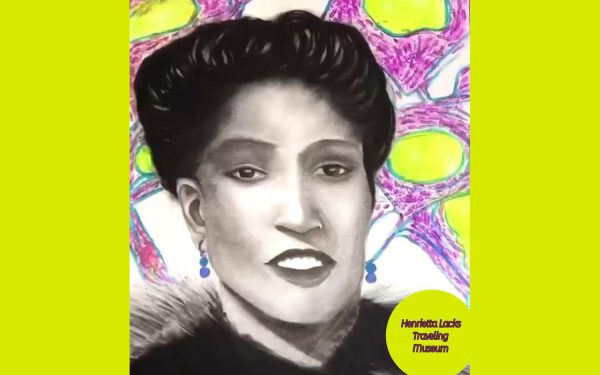
Henrietta Lacks
A traveling museum coming to Kalamazoo College will spotlight Henrietta Lacks
whose cells have led to multiple medical breakthroughs.

A traveling museum and lecture dedicated to the history and legacy of a Black woman who has been key to multiple medical breakthroughs is coming to Kalamazoo College on Thursday, February 17. 

Jermaine Jackson, Henrietta Lacks’ great-nephew and a Kalamazoo resident, will provide a lecture and question-and-answer session exhibiting the Henrietta Lacks Traveling Museum from 6–8 p.m. at the Arcus Center for Social Justice Leadership.  

Johns Hopkins Hospital was treating Lacks for cervical cancer in 1951 when her cells were sent to a nearby tissue lab without her consent. At that lab, doctors found her cells to be unlike anyone’s they had ever seen. Instead of dying, her cells—later called HeLa cells—doubled every 20 to 24 hours. 

Although Lacks died of cancer on October 4, 1951, at age 31, her cells continue to benefit the world. HeLa cells are used to study the effects of toxins, drugs, hormones and viruses on the growth of cancer cells without experimenting on humans. They’ve also been used to test the effects of radiation and poisons, to study the human genome and learn more about how viruses work, playing a crucial role in the development of the polio and COVID-19 vaccines. 

Lacks’ story speaks to issues such as global health, scientific research, bioethics, patient rights and equity. The event is free and open to the public. 

Humanities Grant Boosts Experiential Learning Project

Portrait of Humanities Project Leader Shanna Salinas
Associate Professor of English Shanna Salinas

A major grant from the Andrew W. Mellon Foundation will provide new learning opportunities for Kalamazoo College students and faculty seeking solutions to societal problems and promote the critical role of the humanities in social justice work.

The $1.297 million three-year grant will provide funding for the College’s Humanities Integrated Locational Learning (HILL) project, which is building student coursework rooted in K’s commitment to experiential learning and social justice to address issues such as racism, border policing, economic inequities, homelessness and global warming, while examining history, how humans share land, and the dislocations that bring people to a communal space.

The project was envisioned by Associate Professor of English Shanna Salinas (Co-PI), Arcus Center for Social Justice Leadership Assistant Professor of Sociology Francisco Villegas (Co-PI) and Professor of English Bruce Mills. HILL will invite K faculty to build curricula that foreground how power structures produce destabilizing dynamics and the collective response(s) of affected communities through the development of course materials, collaborative faculty-student research and community engagement, the development of program assessments and the sharing of oral histories tied to partnering projects and organizations.

Portrait of Humanities Project Leader Francisco Villegas
Arcus Center for Social Justice Leadership Assistant Professor of
Sociology Francisco Villegas

Each class within the curriculum will fit into one of two cluster programs: the first focuses on hubs outside of Kalamazoo such as New Orleans, St. Louis and San Diego; the second looks within Kalamazoo with themes relevant to the city such as prison reform and abolition, and migrants and refugees. Both cluster programs will contribute to a digital humanities initiative for publishing, archiving and assessing coursework and partnerships. Each will provide opportunities for immersing students in local heritage, cultures, landscapes, opportunities and experiences.

Salinas and Villegas will co-direct the HILL initiative. The three sites outside Kalamazoo—New Orleans, St. Louis and San Diego—were chosen for their current or historical dispersion of people from their homeland, as well as dislocated communities with strong histories of social justice movements. About 15 to 20 students at a time will go to those cities to further their experiential learning. Salinas added that faculty and students will first put in research and legwork related to their collaborative partnerships with a year of concentrated work. Then, by about December 2022, they will be ready to conduct in-person learning, first in New Orleans.

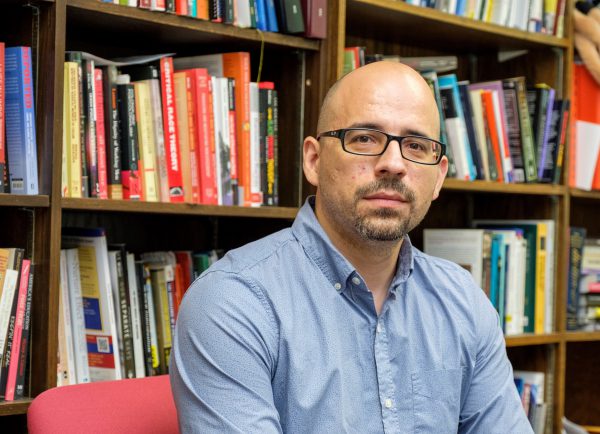
Portrait of Bruce Mills
Professor of English Bruce Mills

In addition to co-directing the project, Salinas will also serve as the curriculum coordinator for New Orleans. “We hope that students will develop an understanding of place as a living entity with a storied history and people who are a part of that location,” Salinas said. “We want students to learn what it means to be a part of a particular place. We want them to contend with histories, and meet the residents and people who inhabit the spaces we study with a real sense of generosity and purpose. We want to change students’ understanding about how they approach space and operate within it.”

Villegas plans to build on his strong connections within Kalamazoo County in leading the cluster focused on issues inside Kalamazoo. As a member of an exploratory taskforce (and now advisory board chair), he helped Kalamazoo County launch a community ID program in 2018, allowing residents, including those otherwise unable to get a state ID, to obtain a county ID.

“I think the grant speaks to the Mellon Foundation seeing promise in the kind of work we are imagining,” Villegas said. “It’s encouraging that they are willing to invest so greatly in such a project. They’re also recognizing the ethics of the project. They’re trusting that we’re going to engage with cities, including our home city, with a sense of respect and with a recognition of furthering community agendas already in place rather than imposing our understandings to other spaces. Most importantly, we’re invested in thinking about how students can consider the humanities in these projects as a way of producing nuanced understandings toward addressing very big problems.”

Mills will lead the digital humanities portion of the initiative. He noted that one measure of success for participating faculty will be how HILL shows the enduring dimensions of its partnerships with the digital project playing a large role.

“When you create classes, writing projects, oral histories or collaborate on community projects, these efforts often get lost when they just go into a file or a paper or are not passed along in local memory,” Mills said. “The digital humanities hub is an essential part of this initiative because faculty, students and city partners will have a site for a collective work to be published or presented. Community members will have access to it. That means the work being done will not disappear.”

Beau Bothwell tenure
Associate Professor of Music
Beau Bothwell
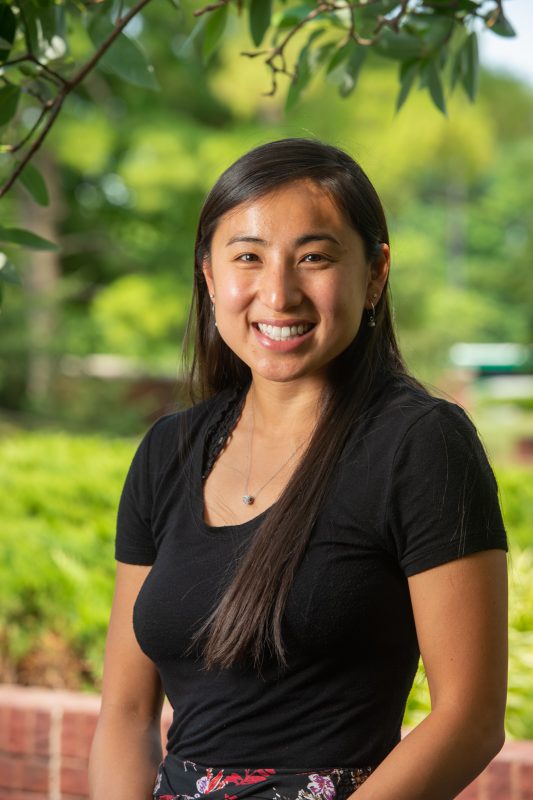
Portrait of Esplencia Baptiste
Associate Professor of
Anthropology and Sociology
Espelencia Baptiste
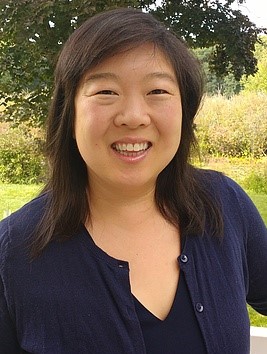
Portrait of Christine Hahn
Professor of Art and Art History
Christine Hahn

In addition to Salinas, Villegas and Mills, Associate Professor of Music Beau Bothwell and Professor of Art and Art History Christine Hahn will be curriculum coordinators for St. Louis and San Diego respectively. The first four courses that will be offered in the HILL project are Advanced Literary Studies (Salinas, English); Missionaries to Pilgrims: Diasporic Returns (Associate Professor Espelencia Baptiste, Anthropology and Sociology); The World Through New Orleans (Bothwell, Music); and Architecture Urbanism Identity (Hahn, Art and Art History).

The Mellon Foundation’s grant to K is one of 12 being issued to liberal arts colleges as a part of the organization’s Humanities for All Times initiative, which was created to support curriculum that demonstrates real-world applications to social justice pursuits and objectives.

“Kalamazoo College’s commitment to social justice is most profoundly realized through students’ opportunities to connect the theoretical with hands-on work happening in our communities,” Kalamazoo College President Jorge G. Gonzalez said. “We’re grateful for the Mellon Foundation’s generous support, which will enable us to build on our foundation of experiential education and demonstrate to our students how the humanities have a practical role in fostering positive social change.”

The Mellon Foundation notes that humanities thought and scholarship efforts influence developments in the social world. However, there’s been a sharp decline in undergraduate humanities study and degree recipients nationwide over the past decade despite students’ marked interest in social justice issues. The initiative targets higher student participation in the humanities and social justice while building their skills in diagnosing cultural conditions that impede a just and equitable society.

“The Humanities for All Times initiative underscores that it’s not only critical to show students that the humanities improve the quality of their everyday lives, but also that they are a crucial tool in efforts to bring about meaningful progressive change in the world,” said Phillip Brian Harper, the Mellon Foundation’s higher learning program director. “We are thrilled to support this work at liberal arts colleges across the country. Given their unequivocal commitment to humanities-based knowledge, and their close ties to the local communities in which such knowledge can be put to immediate productive use, we know that these schools are perfectly positioned to take on this important work.”

School Psychologists Group Honors K Alumna

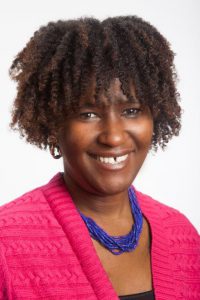
School Psychologists Group Honors Zoe Barnes
Zoe Barnes ’18 is being honored by
the National Association for School Psychologists.

A Kalamazoo College alumna, inspired by her experiences in diversity at K, has earned a special honor from the National Association of School Psychologists (NASP).

Zoe Barnes ’18, now a graduate student at Southern Illinois University-Edwardsville (SIUE), has received the 2021 Student Leader Champion Award for her efforts in advancing social justice throughout her university, in the community and through her chosen profession.

“I’m very excited because it’s a wonderful honor,” Barnes said. “Social justice is a buzzword to some, but it’s a constant, ongoing process of challenging what we know and checking our own biases. In school psychology, social justice is important because if you look at a school and see who the teachers and staff are, you will often see groups dominated by white staff members. They don’t reflect the increasing diversity of students, especially in public schools. Social justice can help us challenge the status quo.”

Several students at SIUE, including Barnes, expressed their interest in social justice to faculty last summer. The professors sensed an opportunity to connect them all, leading to the formation of the Graduate Students for Social Justice, a group that talked about injustices on campus and developed ideas for addressing social justice within their respective programs.

Barnes is a member of that group and also recently served as the social justice chair of the Graduate Organization for Child and Adolescent Psychology Students (GOCAPS) at SIUE. Her service led a faculty member to nominate Barnes for the NASP honors.

Barnes said the K community helped her develop an interest in diversity, equity, inclusion and social justice after she arrived from a predominantly white community in Grand Rapids, Michigan. At that point, Barnes started seeing more peers who looked like her. Students of color provided an energizing space where she could discuss the discrimination and microaggressions she experienced on campus with others who could relate.

“Being at K, and just being surrounded by people who look like me and had similar experiences really helped me,” Barnes said. “Talking helped put a name to the discomfort.”

Barnes double majored in Spanish and psychology and minored in anthropology-sociology at K. After a gap year, Barnes looked for help in determining her career path. At that point, she talked with Suzie Gonzalez ’83, spouse of K President Jorge G. Gonzalez.

“I went down this route to school psychology because of Suzie Gonzalez,” Barnes said. “I was thinking about what I wanted to do with my life when I met up with her. She was a school psychologist and she definitely inspired me.”

Barnes earned her master’s degree through SIUE in December and now is seeking a clinical child and school psychology specialist degree with an expected graduation date of May 2022. She will be honored at NASP’s 2022 annual convention in February.

“I would love to make an impact however I can as a school psychologist,” Barnes said. “When I picture my career, I want to be firmly planted in a school district. I want to walk down the halls and recognize all the students and know their educational history. Early intervention is a huge part of school psychology and I would love to support them from the very beginning.”

Social Justice, International Sports Expert to Visit K

A world-renowned expert on social justice and its role in international sports will visit Stetson Chapel at Kalamazoo College on Monday, Nov. 4.

Social Justice and International Sports Expert Richard Lapchick
Social justice and international sports expert Richard Lapchick will visit Kalamazoo College on Monday, Nov. 4.

Richard Lapchick, the endowed chair and director of the DeVos Sports Business Management Program at the University of Central Florida and the president of the Institute for Sport and Social Justice (ISSJ), will conduct a conversation about sports, justice and activism with Arcus Center for Social Justice Leadership Director Lisa Brock. Doors will open at 6:30 p.m. before the event, “Just Sport: A Conversation on Sports, Justice and Activism with Dr. Richard Lapchick,” begins at 7:30 p.m.

Lapchick founded the Center for the Study of Sport in Society in 1984 at Northeastern University. He served as its director for 17 years and is now its director emeritus. The center has attracted national attention to its efforts ensuring the education of athletes from junior high school through the professional ranks. The center’s Project TEAMWORK was called “America’s most successful violence prevention program” by public opinion analyst Lou Harris. The project won the Peter F. Drucker Foundation Award as the nation’s most innovative nonprofit program and was named by the Clinton Administration as a model for violence prevention.

Lapchick also helped form the National Consortium for Academics and Sport, which is now the ISSJ, in 1985. Nationally, ISSJ athletes have worked with nearly 19.9 million young people in the school-outreach and community-service program, which focused on teaching youths how to improve race relations, develop conflict-resolution skills, prevent gender violence and avoid drug and alcohol abuse.  They collectively donated more than 22 million hours of service while member colleges donated more than $300 million in tuition assistance.

Lapchick has authored 17 books, received 10 honorary doctorates, and is a regular columnist for ESPN.com and The Sports Business Journal. He has written more than 600 articles, has given more than 2,900 public speeches, and has appeared several times on Good Morning America, Face the Nation, The Today Show, ABC World News, NBC Nightly News, The CBS Evening News, CNN and ESPN. From the sports boycott against apartheid to exposing the connection between sports and human trafficking, he has spoken before Congress, and at the United Nations, the European Parliament and the Vatican.

For more information on the event, please call 269.337.7398 or visit the Arcus Center on Facebook.

Arcus Center Invites Public to With/Out-¿Borders? Events

The public is invited to join the Arcus Center for Social Justice Leadership for two events related to its With/Out-¿Borders? gathering, which is scheduled for Oct. 8-15.

The opening ceremony is slated for 5 p.m. Wednesday, Oct. 10, at the Arcus Center for Social Justice Leadership, 205 Monroe St. A community breakfast is scheduled for 8:30 a.m. Thursday, Oct. 11, in the Hornet Suite at K’s Athletic Fields Complex, 1600 W. Michigan Ave. Register for either event through email at acsjl@kzoo.edu.

With/Out-¿Borders?
Sunni Patterson, Denenge Akpem and Shannon Haupt participate in a ritual performance of release and healing during the 2016 With/Out – ¿Borders? Afrofuturism breakout session “Breaking the Legacy, Conjuring Futures.”

The third With/Out-¿Borders? invitational gathering will bring together land activists who approach social movement work in small grassroots organizations in the U.S. and Puerto Rico, South Africa, Canada, Colombia, Mexico and the Pacific Islands. They will discuss how land is essential to indigenous sovereignty movements, contested through forced dislocation, and an asset for strength and nurturance.

“The activists coming to Kalamazoo in October are engaged in some of the most effective and forward-thinking work around land sovereignty and protection in the world,” Arcus Center for Social Justice Leadership Executive Director Mia Henry said. “We are honored to have the opportunity to use our resources to uplift and strengthen the work of each of our guests, living into our mission of capacity building on a global level.”

The purpose of the With/Out-¿Borders? gathering is to:

  • unite global grassroots activists who envision a world free from oppression while actively working toward that vision;
  • create an environment where activists can learn from and support each other; and
  • develop deep and meaningful relationships between the Kalamazoo College community, these activists and their work.

The Arcus Center for Social Justice Leadership at Kalamazoo College develops and sustains leaders in human rights and social justice through education and capacity building. Kalamazoo College, founded in Kalamazoo, Mich., in 1833, is a nationally recognized liberal arts college and the creator of the K-Plan, which emphasizes rigorous scholarship, experiential learning, independent research and international and intercultural engagement.

For more information on the With/Out-¿Borders? gathering or either of its public events, contact Bailey Mead at 269-337-7398 or bailey.mead@kzoo.edu.

Shared Grant to Proactively Prevent Sexual Violence

Kalamazoo College is receiving nearly $300,000 from the U.S. Department of Justice through a shared grant to proactively prevent domestic violence, dating violence, sexual assault and stalking on campus.

K is the only Michigan institution and one of just a few small private schools among 60 colleges and universities nationwide to receive part of the $18 million being distributed. K’s portion, totaling $298,698, will:

  • create a Campus Coordinated Community Response Team;
  • expand training for campus safety officers and Title IX investigators;
  • expand victim services;
  • hire a full-time project coordinator who will focus on culturally relevant prevention efforts;
  • further enhance the College’s focus on student safety; and
  • support a K partnership with the Kalamazoo YWCA and the Kalamazoo Department of Public Safety. The partnership will bring a victim advocate to campus for 20 hours a week and formalize response to incidents that involve students in the city.

“This grant is very competitive, so we’re excited to have this additional funding and support,” said Ellen Lassiter Collier, K’s Title IX coordinator and director of gender equity. She added documented endorsements of existing efforts from students, faculty and staff likely were determining factors for the Department of Justice in securing the shared grant.

“This kind of grant traditionally goes to public schools,” Lassiter Collier said. “That speaks to the work the College is already doing and the support we receive from across campus.”

K’s existing efforts include programs such as Green Dot, which offers bystander training that statistically reduces the likelihood of dating and domestic violence, stalking and sexual assault. Green Dot at K is funded through the State of Michigan Campus Sexual Assault Grant Program, which gave the College about $18,600 in 2016 and $41,800 in 2017.

The Department of Justice grant, though, will enhance such efforts and others, including the creation of targeted online training programs for students, to ensure the programs and training materials are culturally competent considering K’s diversity, and relevant to its student experiences such as study abroad.

With study abroad, for example, “We want students to know that the College is still a source of support and potential investigation should something happen abroad,” Lassiter Collier said.

For more information on the grant from the Department of Justice, visit its website.